Modern computer games have a great deal to offer, technically. Photorealistic graphics, expansive open worlds, sophisticated physics, orchestral soundtracks and increasingly convincing artificial intelligence have transformed what is possible in an interactive medium.
And yet, the retro gaming movement is arguably in better shape than it has ever been.
That might initially seem contradictory. Why would anyone deliberately seek out games with primitive graphics, limited sound and hardware restrictions when modern machines can deliver almost cinematic experiences?
The answer is that the technical limitations of yesteryear helped create an aesthetic language of their own. What was once a necessity has become a style.
Crunchy pixel art can feel reassuring rather than restrictive. A limited colour palette can be more evocative than a photorealistic environment. The squeaky, repetitive chiptune soundtrack of an indie game can create an atmosphere that a full orchestra simply cannot reproduce.
These characteristics are no longer merely signs of technological inadequacy. They are recognised as artistic choices.
Nostalgia Meets Innovation

When we fire up an older game, we might experience a powerful rush of nostalgia. Interestingly, this can happen even when we’re too young to have actually played the game when it was released.
There is now a kind of shared cultural memory surrounding the games of the 1980s, 1990s and early 2000s. Their visual styles, sound effects, menus and even loading screens have become instantly recognisable. Younger players can experience nostalgia for an era they never personally experienced.
Of course, the reality of playing some older games wasn’t always quite so romantic.
Cartridges could be temperamental. Save systems were frequently limited or non-existent. Difficulty could be punishing, and there was often little guidance for players who became stuck. Anyone who remembers blowing into the bottom of a cartridge, swapping discs or waiting for a game to load will understand that nostalgia has a tendency to smooth over the rough edges.
Today, however, we can have the best of both worlds.
Older games can be played through emulation, remasters, collections and re-releases, often with improved resolution, faster loading, modern controllers and quality-of-life features. Save states, rewind functions and accessibility options can remove some of the frustrations without necessarily removing what made the original experience special.
The result is an interesting combination: the aesthetics and design philosophies of the past, supported by the conveniences of the present.
Accessible for Everyone
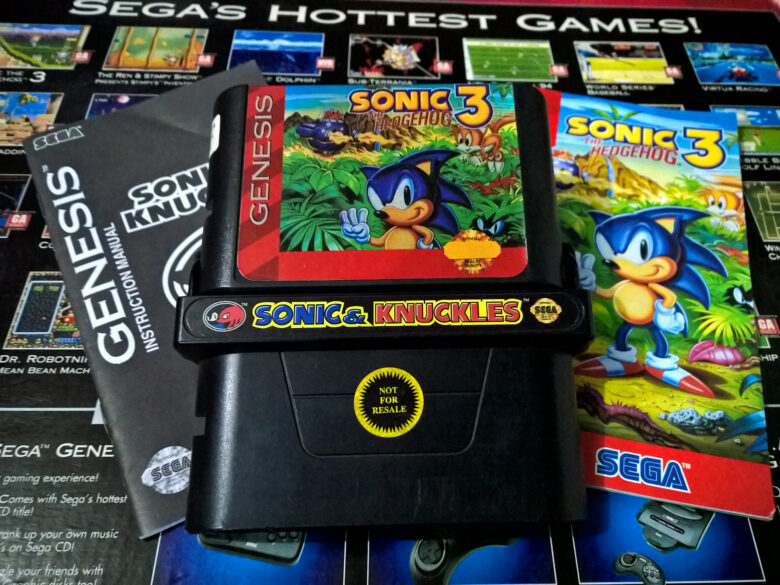
One major downside of older games is that they weren’t always tested extensively by the standards we expect today. Many were aimed at committed players who were prepared to tolerate — or even embrace — considerable difficulty.
Take Aladdin on the Mega Drive as an example. Games of that era could demand considerable patience and repetition from players. Failure wasn’t necessarily something to be designed around; it was often part of the expected experience.
Modern developers have become much more sophisticated about different types of players. A game can offer a gentle introduction for someone picking up a controller for the first time while also providing considerable depth for an experienced player.
Difficulty has also become something that developers can manipulate much more deliberately.
Some games allow players to select different difficulty levels. Others offer accessibility settings, adjustable controls, assist modes or optional challenges. Meanwhile, entire genres have emerged that deliberately embrace the unforgiving nature of older games.
The bullet-hell genre is a particularly good example. These games can throw enormous numbers of projectiles at the player, requiring concentration, pattern recognition and precise movement. Rather than hiding the difficulty of older games, they turn it into the central attraction — sometimes even parodying how absurdly challenging games could be.
Casual Fun

Another important development is the sheer accessibility of modern gaming.
You no longer need a dedicated console or expensive gaming PC to participate. Smartphones and tablets have put games into the hands of billions of people, while web-based games and digital distribution have made it easier than ever to try something without making a major commitment.
This has helped gaming expand beyond the traditional image of the dedicated player sitting in front of a console for several hours.
Sometimes people simply want five or ten minutes of entertainment.
Casual games can provide exactly that. Familiar concepts can be stripped down and presented in a format that requires very little explanation. Free bingo, for example, takes an established and recognisable pastime and presents it in a convenient digital format, allowing players to enjoy short sessions without needing to master complicated controls or mechanics.
This accessibility is arguably one of the most important developments in gaming: the medium can now accommodate both the person who wants to spend an entire weekend exploring an enormous virtual world and the person who simply wants something entertaining during a spare few minutes.
Sharpening Different Skills
As gaming has evolved, it has also become capable of testing players in dramatically different ways.
The emergence of 4X strategy games — generally built around the concepts of exploration, expansion, exploitation and domination — is a good example. Sid Meier’s Civilization, which began in 1991, demonstrated how a game could turn history, economics, diplomacy and military strategy into an enormous interactive system.
That experience is a world away from the reflexes demanded by a platform game or the split-second decision-making of a deathmatch shooter.
Different genres exercise different abilities. Puzzle games can reward logic and pattern recognition. Strategy games can demand planning several moves ahead. Rhythm games depend on timing. Management games involve balancing competing resources. Multiplayer games can require communication and teamwork.
This variety is one of gaming’s greatest strengths.
It isn’t simply about becoming faster with a controller. Games can ask us to think, plan, remember, experiment, communicate and make decisions under pressure.
More Variety, More Enjoyment
The gaming industry can certainly be accused of identifying a successful formula and playing it to death. Sequels, remakes, annual releases and familiar franchises dominate large parts of the market.
But outside the biggest commercial productions, innovation is everywhere.
In fact, one of the most interesting things about games is that innovation rarely means creating something completely unprecedented. More often, it means taking familiar ingredients and combining them in an unexpected way.
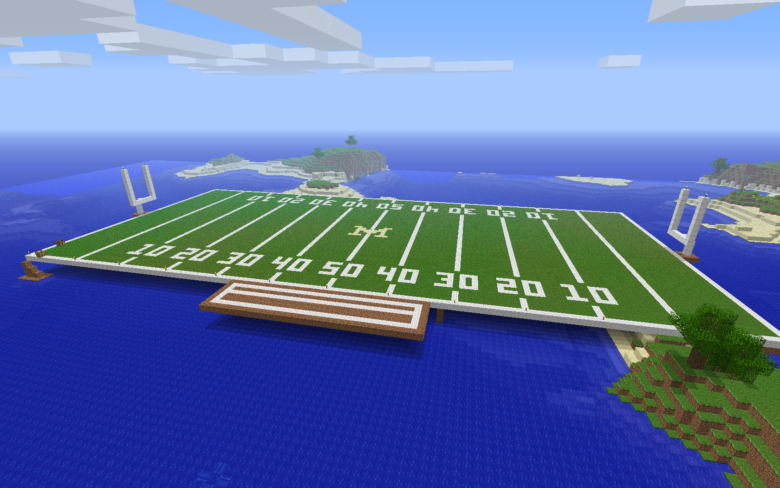
Minecraft is an excellent example. Its building, exploration and survival mechanics weren’t created from nothing, but their combination produced something that became enormously influential.
Terraria similarly took ideas associated with exploration, crafting, combat and sandbox games and reassembled them into something distinctive.
Mods have played an especially important role in this process. Some of gaming’s most interesting ideas have emerged from players modifying existing games and experimenting with mechanics that the original developers hadn’t necessarily intended.
This makes gaming feel less like a medium with a single direction of travel and more like a conversation between generations.
Developers borrow from the past. Players modify what already exists. Indie studios deliberately imitate old technology. Major publishers revisit decades-old franchises. New hardware makes previously difficult ideas possible, while old limitations continue to inspire new artistic styles.
The Best of Both Worlds
Perhaps that’s why retro gaming continues to thrive despite the extraordinary technical capabilities of modern machines; the choice isn’t really between old games and new ones.
Modern technology allows us to preserve, reinterpret and improve upon the games of previous generations, while contemporary developers can take the visual language, mechanics and limitations of those games and use them in entirely new ways.
A pixel-art platformer can sit alongside a photorealistic open-world adventure. A chiptune soundtrack can accompany a brand-new story. A game inspired by 30-year-old mechanics can run on hardware that would have seemed like science fiction to the original developers.
Gaming has therefore become something of a meeting point between technological progress and artistic memory.
The remarkable thing isn’t that retro gaming has survived. It’s that the past and the present have become increasingly good at informing one another.
Leave a Reply